The Parable of the Two Debtors: Learning to Forgive as We Are Forgiven
The parable of the two debtors can teach us many things. As we live a Christian life, it is important to understand that each day we must confront ourselves in order to correct our actions and become more like Christ. Today, let’s dive into how we can improve ourselves in the area of forgiveness. Often, we only think about forgiveness when we are the ones needing it!
If you enjoy the article, don’t forget to leave a comment and take a look at another article on a similar topic: The Jailer: From Hell To Heaven In A Matter Of Seconds.
1 – The One Who Owed Ten Thousand Talents.

Jesus begins the parable with an introduction of how it is in the kingdom of heaven. The king is the one who takes account of the servants, which is a reference to how it will be on the last day.
Suddenly, a man is brought to him, one who owes him ten thousand talents. Since he couldn’t pay, the king commanded that he be sold, along with all he had, including his wife and children. Then, the man began to cry and begged the king to forgive his debt. Something very unexpected happened next.
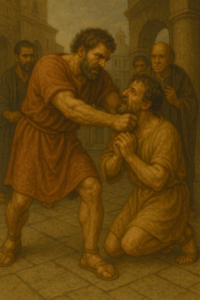
The king decided to forgive all of his debt. As the man left, he saw one of his fellow servants who owed him a hundred pence. That servant did the same thing, asking for forgiveness, and even promised to pay him later. But the man showed no mercy and threw him into prison.
The other servants, seeing what had happened, reported it to the king. The king then summoned the man and said, “Wasn’t I merciful to you, wicked servant? Why didn’t you have pity on your fellow servant?” In his wrath, the king delivered him to the tormentors until he had paid all his debt.
Jesus ends the parable by saying that, in the last days, it will be just like this. Those who do not forgive others will not receive forgiveness from the heavenly Father.
2 – Forgiveness For Me, Judgment To Others.
The main point of the parable is clear: we must forgive others just as God forgave us. But there is something even deeper here.
This week, there was a match involving the Brazilian national team. At home, we started talking about it, and my mother said that Neymar now needs to focus on being a good husband and father. In the heat of the moment, I replied, “This man doesn’t want to repent, that’s the problem.” My mother responded, “Well, people can change.”
In my heart, I was judging him. I believed he didn’t want to repent because his actions didn’t reflect change. Then the Holy Spirit reminded me of when I was a teenager, struggling to quit pornography, and how I just couldn’t break free.
He reminded me how stuck in sin I was, and how I didn’t have a good reputation at school as a Christian. One of my teachers once said, “Rafael is a Christian? If you hadn’t told me, I’d never know!” Still, God gave me opportunity after opportunity to repent and change. Even if others thought I wasn’t trying, God knew I was, and He was patient with me.
That’s when the Holy Spirit brought this passage to my heart. If I’ve been so forgiven, how can I turn around and judge Neymar instead of praying for him?
Conclusion
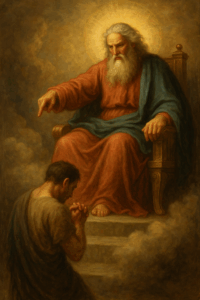
Today’s reflection is a powerful one. As Christians, we are often quick to judge and slow to pray. We forget that the Bible tells us there is power in prayer. We are the first to criticize and the last to intercede.
I invite you today to do for others what Christ did for you. Otherwise, remember, the same way you judge others will be the measure by which God judges you on the last day. Are you ready for that?
If you enjoy the article, don’t forget to leave a comment below and share it with your friends. May God bless you all!